If you’ve gotten quotes for water damage restoration and sewage cleanup back to back, you’ve probably noticed something jarring: the sewage cleanup estimate can run two to five times higher than a standard water damage job of the same size. For homeowners trying to budget for an emergency, that gap can feel confusing, even suspicious. Is one contractor overcharging? Is the other cutting corners?
Neither. The price difference is real, and it’s driven by factors that have nothing to do with square footage and everything to do with what the water actually contains. Understanding why sewage cleanup costs so much more helps you budget correctly, talk to your insurance adjuster with confidence, and avoid the mistake of treating a sewage backup like “just another water leak.”
The Real Difference Isn’t the Water – It’s What’s In It
The restoration industry classifies water intrusion into three categories, and that classification is the single biggest driver of cost.
Category 1:- is clean water – a supply line break, a malfunctioning water heater, rainwater. It’s not a health hazard, and restoration mainly involves extraction and drying.
Category 2:- is “gray water” – water containing some contamination, like an overflowing washing machine or dishwasher. It requires more careful handling but isn’t classified as biohazardous.
Category 3:- is what most sewage backups fall under. This is “black water” – water contaminated with sewage, waste, and often a mix of chemical and biological contaminants. Category 3 water is treated as a biohazard by every major restoration standard, including the IICRC S500.
That single classification jump – from clean or gray water to black water – is what triggers a completely different (and far more expensive) scope of work.
Why Category 3 Water Costs So Much More to Clean Up
1. Nothing Gets “Dried” – It Gets Removed
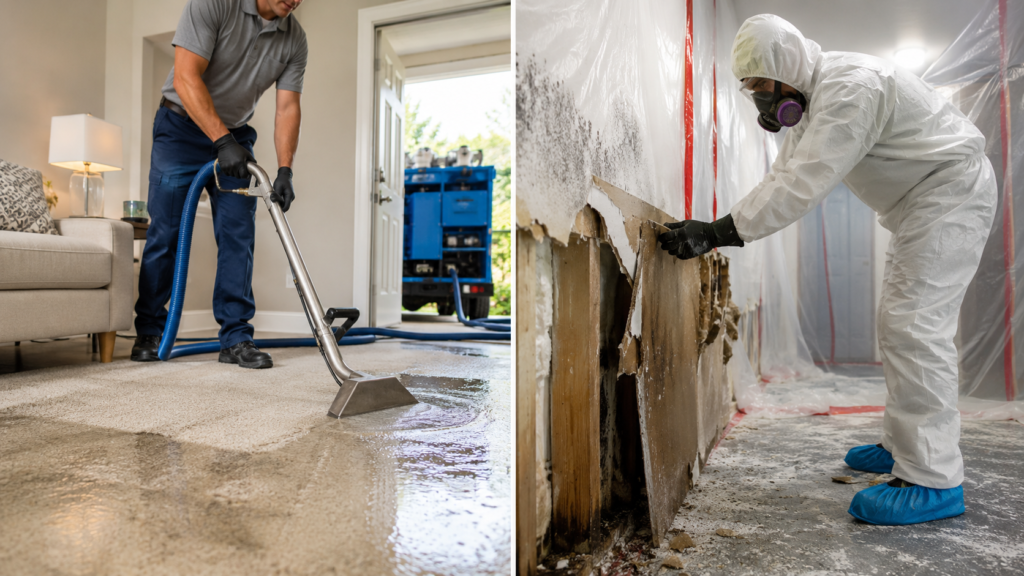
With a standard water damage job, a huge percentage of the work is extraction and drying: pull out standing water, set up air movers and dehumidifiers, monitor moisture levels until everything reads dry. Materials like drywall, subflooring, and even some flooring can often be dried in place and saved.
Sewage-contaminated materials generally can’t be saved, no matter how thoroughly they’re dried. Porous materials – carpet, carpet pad, drywall, insulation, upholstered furniture – absorb bacteria, viruses, and pathogens along with the water. Drying doesn’t remove contamination; it just leaves contaminated material in place. That means sewage cleanup almost always requires demolition and disposal of affected materials, not just drying – and that’s a fundamentally more labor- and material-intensive job.
2. Biohazard Disposal Isn’t Optional, and It Isn’t Cheap
Category 3 waste and the materials that absorb it are classified as biohazardous waste in most jurisdictions. That means contaminated debris can’t just go in a regular dumpster – it has to be bagged, sealed, and disposed of according to biohazard waste regulations, sometimes through a licensed medical or biohazard waste hauler.
Standard water damage debris (wet drywall from a clean water leak, for example) doesn’t carry the same disposal requirements. The compliance and hauling costs alone add a layer of expense that simply doesn’t exist on a Category 1 job.
3. Technicians Need a Higher Level of PPE and Protocol
Standard water extraction crews work in basic protective gear. Category 3 cleanup requires full personal protective equipment – respirators, coveralls, gloves, boot covers – and strict decontamination protocols between work zones. Crews often need to establish containment barriers to prevent cross-contamination into unaffected parts of the home, similar to (though less intensive than) mold containment.
This isn’t a formality. Sewage exposure carries real health risks, from E. coli and other bacteria to parasites and viruses. The extra labor time spent on containment, PPE changes, and decontamination is billable time that a standard water job never requires.
4. Antimicrobial and Sanitization Treatment Is Mandatory
Every Category 3 job requires EPA-registered antimicrobial and disinfectant treatment of all affected surfaces – not just the visibly wet areas, but anything the contaminated water may have touched, including surfaces behind walls and under flooring. This is a distinct, billed phase of the job that clean-water restoration typically skips or minimizes.
5. Air Quality and Odor Remediation Go Further
Sewage backups leave behind odor and airborne contaminants that standard water damage doesn’t produce. Getting a home back to a livable, sellable condition after a Category 3 event often requires ozone treatment or hydroxyl generators, HVAC system cleaning if the system was affected, and sometimes multiple rounds of air quality testing to confirm the space is safe. These are add-on costs that rarely apply to a simple pipe burst.
A Side-by-Side Look at Where the Money Goes
| Cost Driver | Standard Water Damage (Cat 1/2) | Sewage Cleanup (Cat 3) |
|---|---|---|
| Extraction | Standard equipment | Specialized extraction + containment |
| Materials | Often dried and saved | Usually removed and replaced |
| Disposal | Standard debris removal | Regulated biohazard disposal |
| PPE & labor | Basic protective gear | Full PPE, decon protocols |
| Sanitization | Spot antimicrobial treatment | Full-surface disinfection required |
| Odor/air treatment | Rarely needed | Frequently required |
| Typical price range | Lower | 2–5x higher for comparable square footage |
The pattern is consistent: at nearly every stage of the job, Category 3 water forces a more intensive, more regulated, and more labor-heavy process. It isn’t one expensive line item – it’s the compounding effect of a dozen smaller ones.
Does Insurance Cover the Difference?
Often, yes – but not automatically. Most homeowners’ policies cover sudden and accidental sewage backups (as opposed to backups caused by neglected maintenance, tree root intrusion the homeowner knew about, or flood-related sewage, which typically falls under separate flood insurance). Because Category 3 claims are more complex and more expensive, adjusters scrutinize them more closely, and documentation matters enormously. A restoration company experienced with biohazard-level claims will typically document moisture readings, photograph contamination extent, and provide the itemized breakdown adjusters need to approve the higher scope of work.
If you’re navigating a sewage-related claim, it’s worth asking your restoration company directly about their experience with insurance claim assistance for biohazard-level losses specifically – the documentation standard is different from a routine water claim.
Why You Shouldn’t Try to Save Money by Treating It Like a Regular Leak
It’s tempting, when you see the price gap, to ask a contractor to “just dry it out” instead of following full biohazard protocol. This is one of the more common – and costly – mistakes homeowners make. Skipping proper decontamination doesn’t just risk your health; it can also void insurance coverage if an adjuster later determines the loss wasn’t remediated to industry standard, and it can leave your home with hidden contamination that resurfaces as odor or health complaints weeks later.
If you’re unsure whether what you’re dealing with is Category 3, the safest assumption with any backup involving a toilet, sewer line, or septic system is to treat it as sewage-contaminated until a professional confirms otherwise.
What This Means for Fort Worth Homeowners
Sewage backups are more common than most homeowners expect – aging sewer infrastructure, tree root intrusion, and heavy North Texas storms all contribute to backups across Tarrant County. If you’re dealing with a backup right now, the most important thing is getting an accurate assessment before assuming it’s a standard water job. Our team evaluates every loss on-site and provides a clear, itemized breakdown of why a job falls into Category 3 territory (or doesn’t), so you’re never paying biohazard pricing for a clean-water problem – or underpaying for a job that needs full decontamination.
If you’re dealing with a sewage backup or any water emergency in Fort Worth, our sewage cleanup services team responds 24/7 with the equipment and certifications needed to handle Category 3 losses safely. For general water damage – burst pipes, appliance leaks, storm intrusion – our core water damage restoration process gets your property dried and back to normal fast, often without the added cost of biohazard remediation.
Not sure which category your situation falls into? Call (817) 755-5734 for a free, no-obligation assessment, or contact us online and we’ll walk you through exactly what your job requires – and why.
Leave a Reply