
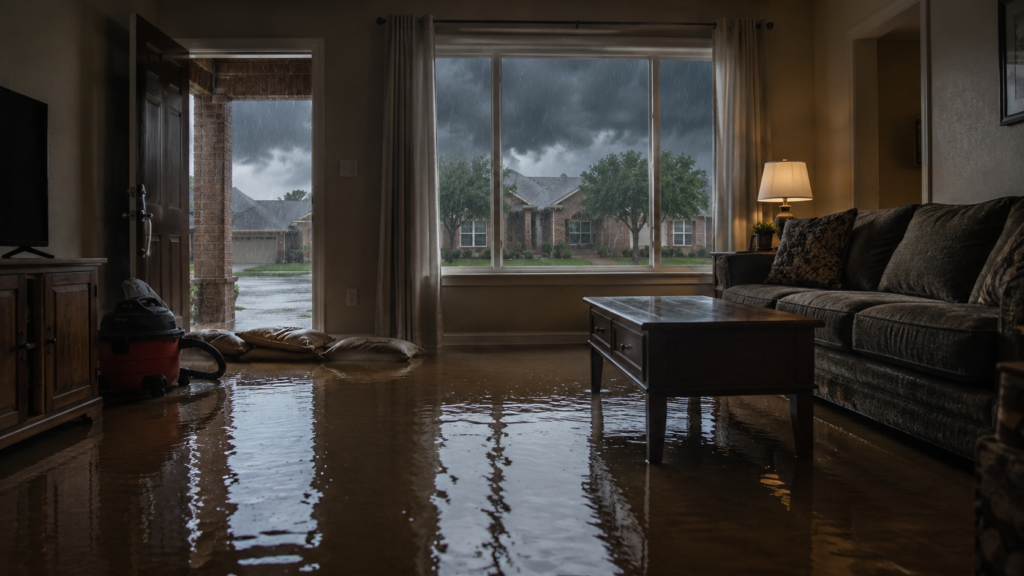
If you’ve lived in Fort Worth for more than a summer, you already know how fast things can turn. One minute the sky is clear and the heat index is pushing past 100 degrees, and the next, a line of thunderstorms is dumping two to three inches of rain an hour over the Metroplex. West 7th has flooded again, cars are stalled on flooded streets, and somewhere in your house, water is finding its way in through a window well, a low spot in the foundation, or a backed-up storm drain that just can’t keep up.
Flash flooding isn’t a rare event here anymore. Fort Worth’s aging storm drain system, much of it decades old, simply wasn’t built for the rainfall rates the city sees today. When the drains can’t move water fast enough, it goes somewhere else – and too often, that’s into homes. If you’re standing in your living room right now looking at water on the floor, this checklist will walk you through exactly what to do in the next few hours, and why timing matters more than almost anything else.
Step 1: Make Sure Everyone Is Safe First
Before you touch anything, check for hazards. Standing water and electricity are a dangerous combination. If outlets, appliances, or your breaker panel are anywhere near the water, do not enter the room until the power to that area is shut off at the breaker – and only do that if you can reach the panel without stepping into water. If you’re unsure, leave the house and call an electrician or your utility provider.
Also watch for structural risks. Floodwater that’s been sitting against drywall or under flooring can weaken the structure faster than people expect, especially in older South Fort Worth homes. If a ceiling is sagging or a floor feels soft, stay out of that area entirely.
Step 2: Stop the Source If You Can
If the water is coming from a burst pipe, supply line, or water heater rather than storm flooding, shut off your main water valve immediately. For burst pipe emergencies, this single step can be the difference between a contained mess and thousands of dollars in additional damage. If the water is coming from outside – a flash flood breach, a window well, or backup from an overwhelmed storm drain – there’s often nothing you can do to stop it at the source, so move straight to documentation and extraction.
Step 3: Document Everything Before You Touch Anything
This step gets skipped constantly, and it’s the one homeowners regret missing most. Walk through the affected area and take photos and video of everything: the water level on walls and furniture, damaged belongings, and any visible structural damage. Insurance adjusters rely heavily on this kind of evidence, and having it ready can speed up your claim significantly. If you’re not sure what your policy actually covers for flash flooding versus general water damage, our insurance claim assistance service can help you understand what to document and how to file correctly.
Step 4: Remove Standing Water as Fast as Possible
Once it’s safe, get standing water out of the house. A wet/dry shop vac works for small amounts, but anything beyond an inch or two of water across a room is genuinely beyond what most homeowners can manage with household equipment. Mold can begin developing within 24 to 48 hours in Fort Worth’s heat and humidity, so the clock starts the moment water touches drywall, carpet, or subfloor.
This is the point where most homeowners call in professional emergency water removal services. Industrial extraction equipment pulls water out of carpets, padding, and flooring far more thoroughly than a wet vac ever can, and it gets the process moving before secondary damage sets in.
Step 5: Move and Elevate What You Can Save
Get furniture, rugs, electronics, and personal items off the wet floor and into a dry room if possible. Use foil or wood blocks under furniture legs to lift them off damp carpet. For anything water-soaked but valuable – documents, photos, electronics – separate them out for specialized attention. Professional document recovery and content pack-out services exist specifically for situations like this, where items need to be stabilized off-site while the rest of your home dries out.
Step 6: Get Air Moving and Start Drying
Open windows if the outside humidity is lower than inside (often not the case in a Fort Worth summer, so don’t force it), and run fans and a dehumidifier if you have one. The goal is to get airflow circulating across wet surfaces to slow moisture absorption into walls and subfloor. This is a stopgap, not a solution – full structural drying requires commercial-grade equipment that most households simply don’t own.
Step 7: Watch for Hidden Moisture
Visible water is only part of the problem. Moisture wicks into drywall, baseboards, insulation, and subfloor where you can’t see it, and that hidden dampness is exactly what feeds mold growth weeks later. A professional moisture detection inspection using thermal imaging can map exactly where water has traveled, which is something no homeowner can do with the naked eye.
Step 8: Call a Restoration Team Before You Start Repairs
It’s tempting to start ripping out wet carpet or drywall yourself, but doing it before the area is fully assessed can actually complicate your insurance claim and miss moisture pockets that lead to mold later. A coordinated storm damage assessment followed by proper structural drying gives you a documented, professional process from start to finish – which matters both for your home’s safety and for your insurance paperwork.
Why Speed Matters More in Fort Worth Than Almost Anywhere Else
Between the summer heat, the humidity, and a storm drain system the city itself has acknowledged is undersized in flood-prone areas like West 7th, water damage here turns into mold damage faster than in cooler, drier climates. A home that sits wet for even two days in July heat is in a very different position than one addressed within hours.
If your basement, crawlspace, or living space has taken on water from a recent storm, don’t wait to see if it dries on its own. Our emergency flood damage repair team is available 24/7 across Fort Worth and Tarrant County, with a 60-minute response guarantee for situations exactly like this.
Get Help Now
Flash floods don’t follow a schedule, and neither do we. If water is in your home right now, call (817) 755-5734 for immediate, 24/7 emergency assistance, or contact us online to get a fast response from our local Fort Worth team.
Leave a Reply