Water damage strikes without warning in Fort Worth, turning a cozy home into a soggy nightmare. From sudden pipe bursts to heavy storms rolling through neighborhoods like Riverside, the aftermath can lead to mold growth and structural woes. As a Fort Worth homeowner, you’re likely facing the tough decision of rebuilding with the right materials. Enter mold-resistant drywall options like USG Sheetrock Mold Tough® and Georgia-Pacific DensArmor Plus®. These aren’t your standard gypsum boards they’re engineered to fight back against moisture and mold, crucial for our humid Texas climate.
At Water Damage Restoration FW, we’ve helped countless residents in areas like Oakhurst and Trophy Club restore their properties after water incidents. In this guide, we’ll break down the key differences, pros, and cons of these two popular products to help you make an informed choice. Whether you’re dealing with a minor leak or major flood recovery, understanding these options can save you time, money, and headaches. Let’s dive in and explore how to protect your home from future water damage.
Understanding Water Damage in Fort Worth Homes
Fort Worth’s weather patterns, with their mix of scorching summers and occasional heavy rains, make water damage a common issue. Homes in Saginaw or River Oaks often see flooding from overflowing creeks or poor drainage during storms. When water infiltrates walls, it weakens traditional drywall, creating a breeding ground for mold and mildew.
The first step after any water event is prompt action. Our team at Water Damage Restoration FW recommends starting with water extraction services to remove standing water quickly. Delaying this can exacerbate damage, leading to costly repairs. Once extracted, assessing the extent of the harm is key that’s where moisture detection inspection comes in, helping identify hidden moisture pockets that could compromise your drywall.
In humid environments like ours, standard drywall absorbs water like a sponge, leading to sagging, staining, and mold. This is why switching to mold-resistant alternatives during restoration is essential. Both USG Sheetrock Mold Tough® and Georgia-Pacific DensArmor Plus® are designed for such scenarios, but they differ in composition and performance.
What is USG Sheetrock Mold Tough®?
USG Sheetrock Mold Tough® is a high-performance drywall panel from USG Corporation, a leader in building materials. It’s specifically formulated for areas prone to moisture, making it ideal for bathrooms, basements, and exteriors in Fort Worth homes recovering from water damage.
Key Features of Sheetrock Mold Tough®
This product features a mold-resistant gypsum core encased in a water-resistant, 100% recycled paper facing treated with mold inhibitors. It’s rated for fire resistance (Type X) and boasts a high abuse resistance, which is great for high-traffic areas.
- Mold Resistance: Achieves a score of 10 the highest on ASTM D3273 mold growth tests, meaning it resists mold better than standard drywall.
- Moisture Tolerance: Can handle up to 95% humidity without warping.
- Ease of Installation: Comes in standard sizes (4×8 feet, 1/2-inch or 5/8-inch thick) and cuts like regular drywall, though it’s slightly heavier.
- Environmental Benefits: Made with recycled content and low-VOC emissions, aligning with green building standards.
In our experience restoring homes after storm damage assessment in places like Trophy Club, Sheetrock Mold Tough® holds up well against the region’s variable weather. It’s particularly useful in kitchens or laundry rooms where steam and splashes are common.
However, it’s not invincible. In severe flooding, like what we’ve seen in industrial areas requiring industrial flood recovery, it may still need replacement if saturated for too long.
What is Georgia-Pacific DensArmor Plus®?
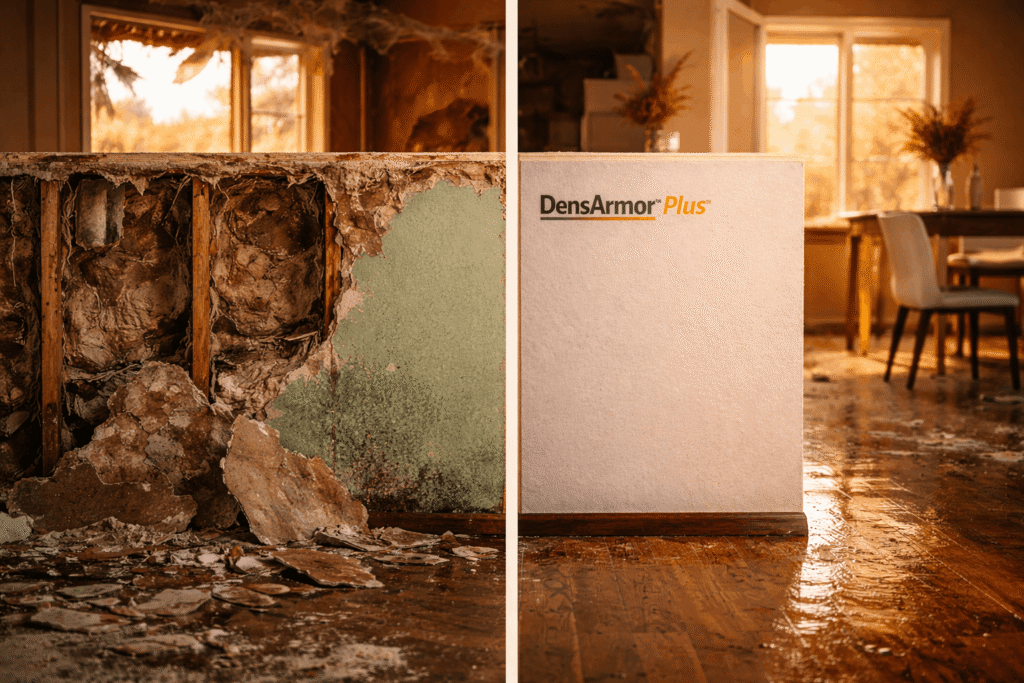
Georgia-Pacific’s DensArmor Plus® takes a different approach, using a fiberglass mat instead of paper facing, which eliminates the organic material that mold loves to feed on. This makes it a go-to for water-damaged interiors in Fort Worth’s older homes, such as those in River Oaks.
Key Features of DensArmor Plus®
DensArmor Plus® is a gypsum core with a moisture- and mold-resistant fiberglass facing on both sides. It’s AbuseGuard® enhanced for added durability against impacts.
- Superior Mold Resistance: No paper means virtually no mold growth; it scores 10 on ASTM tests and is GREENGUARD Gold certified for indoor air quality.
- Water Resistance: Absorbs less water than paper-faced drywall and dries faster, reducing sag potential.
- Installation Perks: Lighter than some competitors, with no need for taping compounds in certain applications, speeding up restoration.
- Versatility: Available in 1/2-inch and 5/8-inch thicknesses, suitable for ceilings and walls.
We’ve installed DensArmor Plus® in many Fort Worth restorations, especially after events in Riverside where quick drying is crucial to prevent further issues like smoke odor removal if fire was involved alongside water damage. Its non-combustible nature adds fire safety, important in our dry seasons.
One drawback? The fiberglass facing can be dustier during cutting, requiring proper PPE for installers.
Comparing the Two: Pros and Cons
Choosing between Sheetrock Mold Tough® and DensArmor Plus® depends on your home’s specific needs. Both excel in mold resistance, but let’s compare them head-to-head.
Performance in Wet Conditions
Sheetrock Mold Tough® shines in high-humidity areas with its treated paper facing, offering better vapor permeability for drying out. DensArmor Plus®, with its fiberglass mat, prevents water wicking entirely, making it superior for direct water exposure like leaks from roofs during Fort Worth thunderstorms.
Durability and Cost
Both are durable, but DensArmor Plus® edges out in impact resistance, ideal for families with kids in neighborhoods like Saginaw. Cost-wise, Sheetrock Mold Tough® is often more affordable (around $15-20 per sheet), while DensArmor Plus® runs $20-25, reflecting its advanced facing.
Installation and Maintenance
Sheetrock is easier for DIY-savvy homeowners, but for professional jobs, DensArmor’s no-tape option saves time. Maintenance is low for both, but regular inspections perhaps via our moisture detection inspection services keep them performing.
Pros of Sheetrock Mold Tough®: Cost-effective, fire-rated, widely available.
Cons: Paper facing can still harbor mold if not dried promptly.
Pros of DensArmor Plus®: Ultimate mold barrier, quick install, eco-friendly.
Cons: Higher price, dust during cutting.
In Fort Worth’s climate, where summer humidity averages 60-70%, either choice beats standard drywall, but DensArmor might be better for flood-prone spots.
Which One Should You Choose After Water Damage?
For most Fort Worth homeowners, the decision hinges on the damage type. If your water issue was from humidity or minor splashes (e.g., in a bathroom remodel post-leak), go with Sheetrock Mold Tough® for its balance of performance and price. It’s perfect for mid-sized homes in Oakhurst recovering from everyday wear.
Opt for DensArmor Plus® if you’re dealing with significant flooding or want long-term peace of mind, especially in basements or exteriors vulnerable to groundwater in areas like Riverside. Our experts at Water Damage Restoration FW assess each case during storm damage assessment to recommend the best fit.
Consider factors like your budget, room usage, and local building codes Fort Worth requires mold-resistant materials in certain renovations. Always pair new drywall with proper ventilation and sealing to maximize effectiveness against our Texas moisture.
Practical Tips for Fort Worth Homeowners
Restoring after water damage isn’t just about picking drywall; it’s a holistic process. Here are actionable steps:
Act Fast: Within 24-48 hours, call professionals for water extraction services to minimize mold risk.
Inspect Thoroughly: Use tools or hire for moisture detection inspection to catch hidden damage in walls.
Choose Wisely: For mold-prone areas, prioritize fiberglass-faced options like DensArmor if budget allows.
Enhance Prevention: Install sump pumps in basements, especially in flood-vulnerable spots like River Oaks. Seal cracks around windows to block storm water.
Maintain Regularly: In humid Fort Worth summers, run dehumidifiers and check for leaks quarterly.
Professional Help: For complex jobs, like those needing industrial flood recovery, trust certified teams to ensure code compliance.
These tips, drawn from our work across Tarrant County, can extend your home’s life and avoid repeat damages.
FAQ
1. How soon after water damage should I replace drywall?
Replace immediately if saturated for over 48 hours to prevent mold. For minor wetting, drying and inspection might suffice contact Water Damage Restoration FW for a free assessment.
2. Is Sheetrock Mold Tough® suitable for exterior walls in Fort Worth?
Yes, its moisture resistance makes it great for exteriors exposed to rain, but pair it with proper siding and flashing.
3. Does DensArmor Plus® require special tools for installation?
No, standard drywall tools work, but wear masks for dust. It’s user-friendly for pros and DIYers alike.
4. Can I use these in bathrooms without additional waterproofing?
They’re mold-resistant but not fully waterproof. Add tile backer boards or membranes for wet zones.
5. What’s the warranty on these products?
Both offer limited warranties against defects; check with manufacturers for specifics on mold resistance.
Conclusion: Protect Your Fort Worth Home Today
Navigating water damage restoration in Fort Worth doesn’t have to be overwhelming. Whether you choose USG Sheetrock Mold Tough® for its affordability or Georgia-Pacific DensArmor Plus® for superior protection, the key is acting swiftly with quality materials. At Water Damage Restoration FW, we’re dedicated to serving communities from Saginaw to Trophy Club with expert guidance and reliable services.
Don’t let water damage linger reach out to our team today for a personalized consultation. Call Water Damage Restoration FW at (817) 755-5734 or visit our site to schedule your moisture detection inspection. Your home deserves the best defense against Fort Worth’s elements. Let’s restore it stronger than before!
Leave a Reply